Hazards Resulting from Exposure to Welding Fumes
One of the main risks in welding work is exposure to welding fumes. Welding fumes are formed when vapors of various materials, which evaporate due to the high heat of the welding process, cool down and condense into extremely fine particles. Several factors are involved in the welding process, and accordingly the composition of the fumes varies and may include metal oxides, silica, alumina, and fluorides, as well as decomposition products of paints, oils, and solvents. Welding fumes can penetrate the respiratory system and from there enter the bloodstream, reach nerve cells in the brain, the spinal cord, and other organs. Such
penetration may have dangerous short - term and long-term health consequences.
Beryllium fumes may lead to damage to the respiratory system and are also carcinogenic (cancer-causing). Welding involving cadmium may cause liver damage and emphysema. Prolonged exposure to fluorides can lead to problems in bones and joints. Lead fumes cause lead poisoning. Manganese, considered the welding metal with the highest health risk, may cause manganese poisoning (also known in English as “Welder’s Disease”) and impair the functioning of the central nervous system. When working with nickel, there is a risk of skin inflammation and other health problems. Vanadium metal fumes may cause bronchitis and pneumonia.
Welding smoke problem solution
The most effective way to deal with the risk associated with welding fumes is to remove them at the source. By using ventilation and extraction systems, the employer can completely prevent welding fumes from entering the welders’ breathing zone. One of the most effective tools for this purpose is welding extraction arms, which extract all welding fumes and gases directly at the point where the welding is performed, thereby creating a clean and safe working environment for welders.
- The arm can be permanently installed on the building walls, directing the extracted smoke to a fan installed outside the building.
- A mobile extraction and filtration system with an arm allows flexibility, enabling smoke extraction when work needs to be performed away from the wall or in a non-fixed work area.
Click here to go to the AIRBRAVO made suction arms page
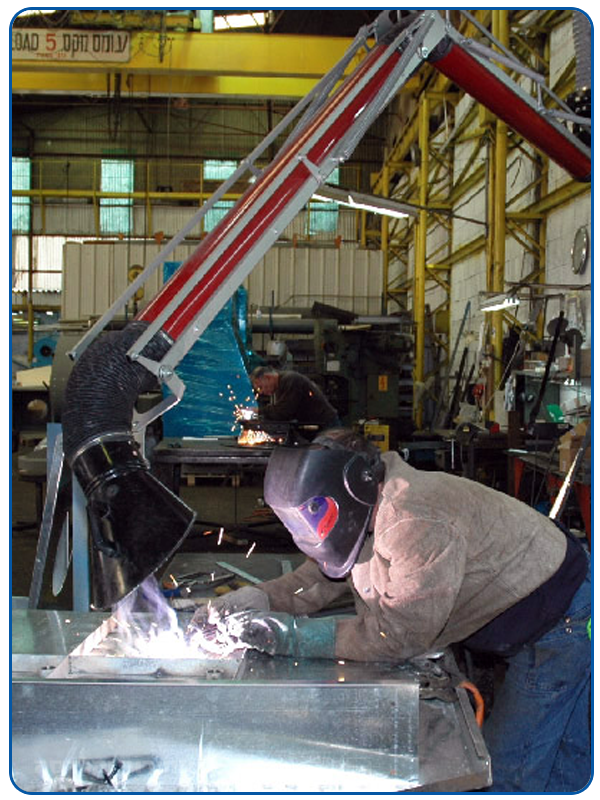
A fixed arm mounted on a wall that allows smoke extraction for a fixed welding station
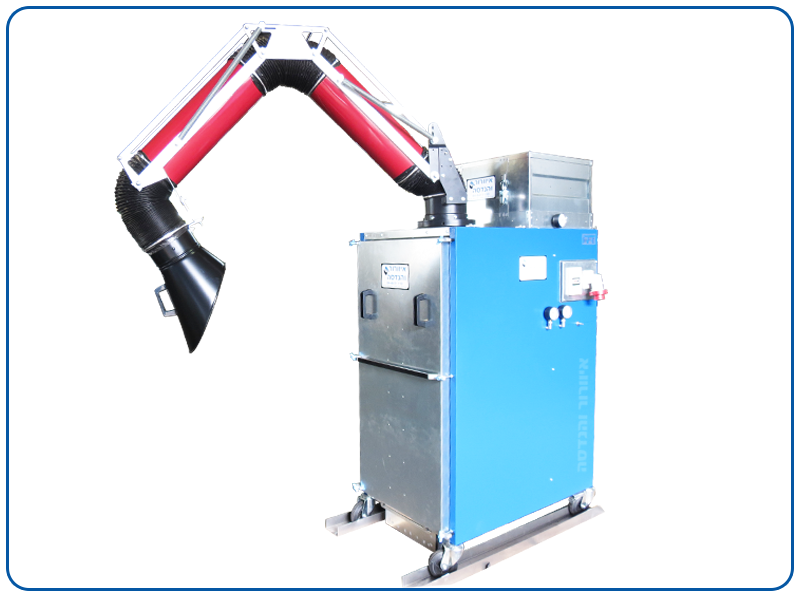
Mobile suction system with a suction arm that allows work mobility